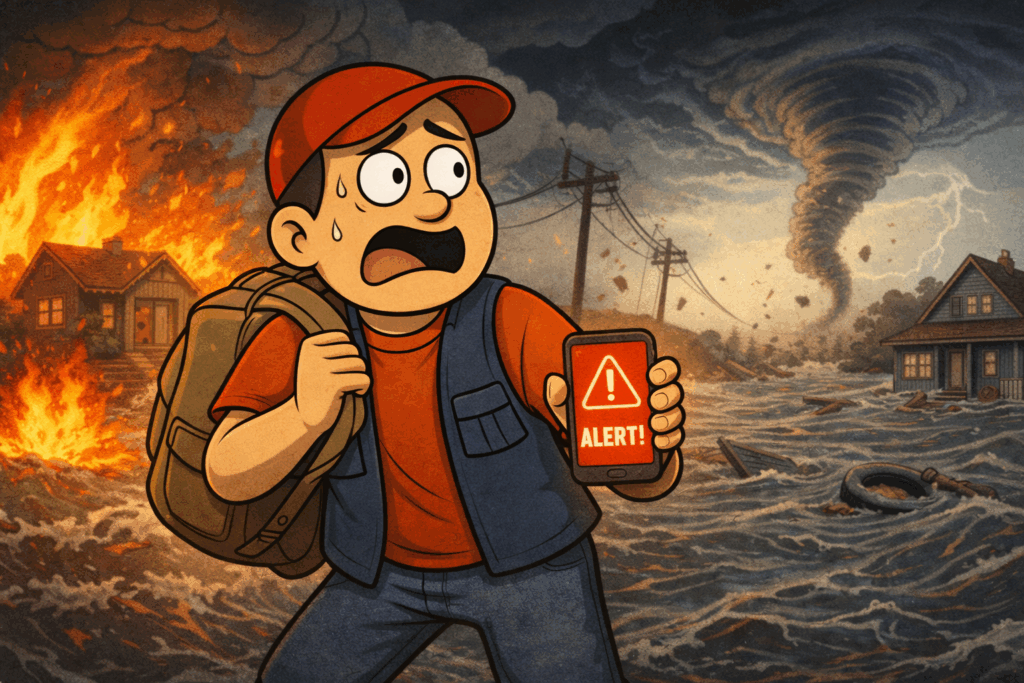
🚨 DISASTER PREPAREDNESS 🚨
A Practical Guide for When Things Go Sideways
I. WHAT PREPAREDNESS MEANS
Disaster preparedness is front-loading decisions so you don’t have to make them when your brain is cooked.
Disasters don’t usually arrive with drama.
They arrive with inconvenience, confusion, and missing information.
The danger isn’t the event.
It’s the cascade that follows.
II. THE DISASTER TIMELINE
Everything that follows plugs into this.
⏱️ 0–1 HOUR: “WHAT THE HELL IS HAPPENING?”
This is where most people screw themselves.
What’s happening:
- Conflicting reports
- Social media nonsense
- People panicking early or freezing
- Infrastructure still half-working
What you do:
- Stop. Breathe.
- Do NOT rush out “to check”
- Get reliable info only (local alerts, emergency radio)
- Take inventory of people, pets, meds, fuel, power
Oh-shit mistakes here:
- Panic driving
- Running errands “real quick”
- Ignoring early warnings
Early bad movement causes later disasters.
⏱️ 1–6 HOURS: CONFUSION BECOMES CONSEQUENCES
This is when systems start failing.
What’s happening:
- Power flickers or dies
- Traffic gridlocks
- Stores empty fast
- Cell networks degrade
What you do:
- Decide NOW: shelter or evacuate
- Fill bathtubs and containers with water if staying
- Charge everything while you can
- Move vehicles to safe positions
- Lock down loose items outside
Oh-shit mistakes:
- “We’ll decide later”
- Assuming power will come back soon
- Waiting for confirmation instead of patterns
Hesitation is the enemy here.
⏱️ 6–24 HOURS: THE REALITY SETS IN
This is where unprepared people start to unravel.
What’s happening:
- Darkness
- Silence
- Limited information
- Rising anxiety
- Secondary emergencies
What you do:
- Establish light, water, food routines
- Limit movement
- Keep phones on airplane mode
- Check in with dependents
- Stop doom-scrolling
Oh-shit mistakes:
- Wandering “to see what’s going on”
- Burning fuel unnecessarily
- Fighting rumors instead of ignoring them
⏱️ 24–72 HOURS: FATIGUE AND BAD DECISIONS
This is the most dangerous window.
What’s happening:
- People are tired
- Tempers flare
- Supplies run low
- Poor judgment spikes
What you do:
- Maintain routine
- Hydrate aggressively
- Sleep in shifts if needed
- Re-evaluate shelter safety
- Prepare for either recovery OR evacuation
Oh-shit mistakes:
- Risky scavenging
- Driving through floodwaters
- Trusting strangers blindly
- Ignoring injuries
III. IF DISASTER HITS WHILE YOU’RE IN A VEHICLE
This is where movies lie to you.
Your car is:
- Shelter
- Weapon
- Coffin
depending on decisions.
Immediate Actions
- Get off the road if possible
- Do NOT outrun weather
- Avoid low areas, bridges, tunnels
- Turn around if water is present (always)
If Traffic Stops
- Stay in vehicle unless unsafe
- Turn off engine to save fuel
- Crack windows for ventilation
- Conserve battery
If You’re Stranded
- Stay visible
- Do not wander unless you know where you’re going
- Use car as shelter
- Run engine only intermittently
Oh-shit moments in vehicles:
- Driving into floodwater
- Abandoning vehicle too early
- Running out of fuel in traffic
Cars kill more people during disasters than the disaster itself.
IV. IF DISASTER HITS WHILE YOU’RE AT HOME
Home is usually safest — until it isn’t.
Immediate Actions
- Secure doors and windows
- Shut off utilities if advised
- Move to safest room
- Gather go-bag, meds, pets
During Power Loss
- Use battery lights, not candles
- Unplug sensitive electronics
- Keep fridge closed
Structural Danger Signs
- Cracking sounds
- Shifting floors
- Water intrusion
- Gas smells
If the structure becomes unsafe, leave immediately.
Oh-shit moments at home:
- Fire from candles
- Generator misuse
- Staying too long in flooding
- Ignoring carbon monoxide risk
V. IF DISASTER HITS AT WORK / SCHOOL / PUBLIC
Panic spreads faster in groups.
What You Do
- Follow official instructions
- Don’t rush exits blindly
- Know multiple exits
- Stick with your group unless unsafe
If Separated
- Contact out-of-area contact
- Go to predetermined meeting point
- Don’t improvise routes unless necessary
Oh-shit moments:
- Crowd crush
- Stampedes
- Ignoring alarms because “probably nothing”
VI. WATER FAILURE (THIS GETS UGLY FAST)
When water fails:
- Sanitation fails
- Health fails
- Morale collapses
Immediate Steps
- Fill containers early
- Boil when in doubt
- Use bottled water first
- Do NOT ration dangerously
Sanitation
- Minimal flushing
- Waste containment if necessary
- Hand hygiene matters more than comfort
VII. FOOD FAILURE (LESS URGENT, STILL IMPORTANT)
Food is about:
- Energy
- Familiarity
- Stability
Eat:
- Simple
- Regular
- Enough
Don’t:
- Overeat early
- Experiment with new foods
- Waste water cooking unnecessarily
VIII. POWER FAILURE CASCADES
Power loss causes:
- No light
- No heat/AC
- No cooking
- No charging
- No info
Plan lighting first.
Everything else follows.
IX. COMMUNICATION COLLAPSE
Assume:
- Calls fail
- Texts delayed
- Internet gone
What Works Longest
- SMS texts
- Emergency radio
- Pre-arranged plans
Stop refreshing feeds.
It increases panic without improving info.
X. PSYCHOLOGICAL “OH SHIT” MOMENTS
These kill people quietly.
- “I need to DO something”
- “Everyone else is leaving”
- “It can’t be that bad”
- “Just one more risk”
These thoughts are dangerous.
Pause.
Slow down.
Think in steps, not outcomes.
XI. FAILURE CASCADES (WHY SMALL MISTAKES BECOME BIG)
One thing fails → another follows.
Examples:
- Power → food → health
- Phone → maps → wrong evacuation
- Fatigue → mistakes → injury
Preparedness breaks chains early.
XII. WHEN TO LEAVE (THE HARDEST CALL)
Leave when:
- Structure is compromised
- Flooding is imminent
- Fire is approaching
- Authorities order it
Stay when:
- Travel is more dangerous
- Structure is intact
- You’re prepared
Leaving too late is worse than leaving early.
XIII. THE RULE PEOPLE HATE
You cannot save everything.
You prioritize:
- Life
- Health
- Mobility
- Property (last)
Accept this early.
XIV. FINAL TRUTH
Disaster preparedness isn’t about gear.
It’s about not making the situation worse.
Most people don’t die because they lacked supplies.
They die because they panicked, hesitated, or chased certainty that never came.
This guide exists so you don’t.