🕶️ SHADOW PEOPLE: PERIPHERAL ENTITITES 🕶️
Category: Liminal Entities / Perceptual Intrusions / Unconfirmed Intelligences
AKA: The Hat Man, Night Watchers, The Hag, Silhouettes, Peripheral Figures,
I. Definition
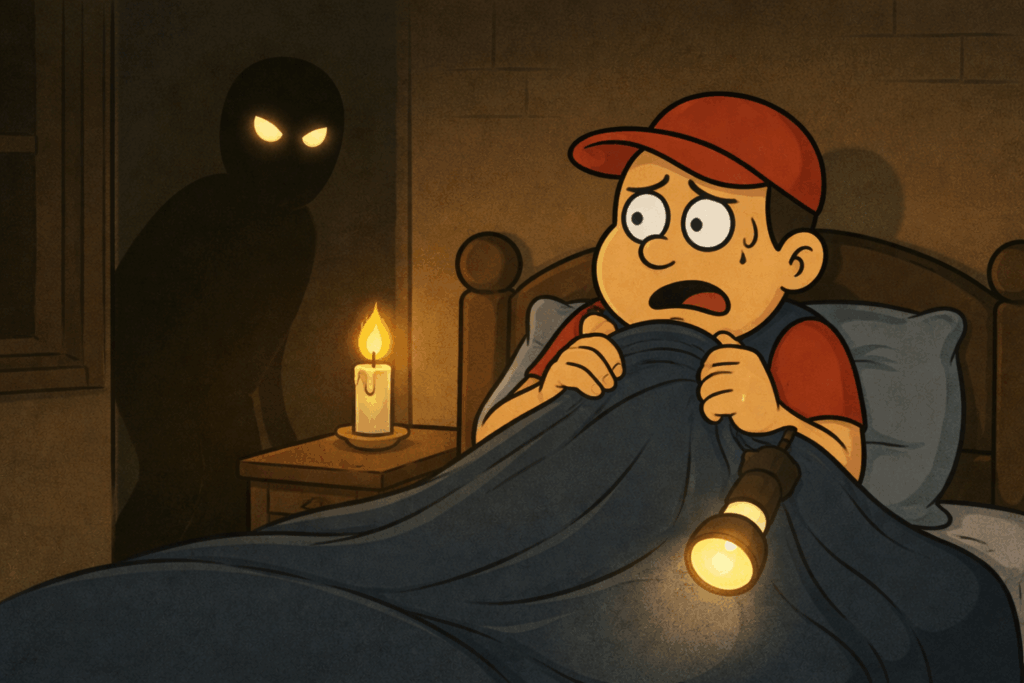
Shadow People are dark, humanoid silhouettes perceived in the absence of a visible light source, often appearing fully formed while lacking facial features, clothing detail, or dimensional depth.
In plain terms:
They look like people, but reality didn’t finish making them.
Unlike ghosts, they do not replay events.
Unlike demons, they do not provoke.
Unlike hallucinations, they remain consistent.
They are most commonly observed:
- At night or in low light
- In peripheral vision
- During sleep disruption, grief, illness, or emotional exhaustion
- During liminal states between waking and sleeping
They do not behave like imagination.
Imagination reacts to attention.
Shadow people wait for it.
II. Core Characteristics
Visual Traits
- Pitch-black or void-like silhouette
- No discernible facial features
- Solid outline that absorbs light rather than blocks it
- Casts no shadow of its own
Behavioral Traits
- Stationary observation or slow, deliberate movement
- Often retreat when directly observed
- Rarely approach
- Do not communicate verbally
- Trigger intense fear disproportionate to appearance
*Key Distinction: Shadow people do not haunt. They occupy.*
III. Major Variants
1. The Hat Man
AKA: The Watcher in the Brim, The Tall One
A tall humanoid silhouette with broad shoulders and a wide-brimmed hat. Appears impossibly still.
Traits:
- Common in childhood encounters and sleep paralysis
- Generates extreme dread without movement
- Rarely retreats immediately
- Remembered decades later with unnatural clarity
The Hat Man appears across cultures, belief systems, and generations with near-identical description.
*Field Note: If a shadow wears a hat, it is not decoration. That shape is intentional.*
2. The Night Hag
AKA: The Old Hag, Sleep Crone, Chest-Sitter
A hunched or looming shadow associated with sleep paralysis.
Traits:
- Paralysis with crushing chest pressure
- Inability to scream or move
- Often positioned near or on the body
Scientific overlap exists, but folklore consistency suggests a shared archetype.
Translation:
Sleep paralysis, but it brought a personality.
3. Corner Watchers
Partial silhouettes peering from doorframes, hallways, or corners.
Traits:
- Retreat when directly acknowledged
- Appear curious rather than hostile
- Often recur in the same physical location
Repeated sightings may indicate a thin place, not a single entity.
4. Crawlers
Low-moving, fast silhouettes along walls, ceilings, or floors.
Traits:
- Erratic, unnatural motion
- Frequently reported in basements or stairwells
- Extreme panic response
Least understood.
Nobody likes these.
5. Full-Frame Figures
Fully visible shadow silhouettes standing openly in rooms or doorways.
Traits:
- Rare
- Associated with trauma, illness, or near-death states
- Do not flee immediately
Threat Level: Minimal
Psychological destabilization: High
IV. Behavioral Rules (Observed Patterns)
Shadow people demonstrate consistent behavior:
- They do not speak
- They do not initiate touch
- They escalate when acknowledged
- They increase with fixation
- They react poorly to attention
*Rule of Survival: If you notice one, act as though you didn’t.*
Attention does not repel them.
Attention anchors them.
V. Why Shadow People Are Different
Most paranormal phenomena announce themselves.
Ghosts knock.
Poltergeists throw things.
Demons provoke.
Shadow people do none of this.
They behave like something already inside the system, observing without interference.
This is why investigators consider them more unsettling than hostile entities.
“An entity that doesn’t need you to notice it was never here for you.“
VI. The Consistency Problem
Shadow people are reported:
- Across cultures
- Across ages
- Across belief systems
- Across centuries
- With near-identical descriptions
Hallucinations vary wildly.
Shadow people do not.
The Hat Man alone has been independently described by:
- Children with no folklore exposure
- Adults decades apart
- Medical patients
- Combat veterans
- Individuals with no sleep paralysis history
Fear does not explain this.
Pattern does.
VII. Peripheral Vision & Pre-Attentive Recognition
Shadow people frequently manifest just outside direct focus:
- Doorways when you look away
- Mirrors at the edge of reflection
- Behind you when turning your head
Neurology explains distortion.
It does not explain:
- Humanoid consistency
- Stationary posture
- Repeated location
- Fear before conscious recognition
Investigators refer to this as Pre-Attentive Recognition.
Your brain knows what it is
before you decide whether it’s real.
VIII. Sleep States & Vulnerability
Shadow people commonly appear during:
- Sleep paralysis
- Hypnagogic states
- Severe exhaustion
However:
- Sleep paralysis produces many hallucinations
- Shadow people produce the same ones
Additionally:
- Some encounters occur while fully awake
- Some are witnessed by multiple people
- Some coincide with environmental disturbances
Conclusion:
Sleep states may lower resistance, not create the entity.
You didn’t imagine the visitor.
You unlocked the door.
IX. Environmental Correlation
Increased sightings occur in:
- Hospitals and care facilities
- Old apartments
- Homes with inconsistent lighting
- Locations with emotional trauma
- Liminal architecture (hallways, stairwells)
They favor threshold spaces — physical and psychological.
X. The Attention Feedback Loop
Documented progression:
- Initial brief sighting
- Repeat appearance
- Recognition (“That wasn’t nothing”)
- Fixation
- Escalation
Attention stabilizes the phenomenon.
“The moment you try to prove or disprove it, you become useful.“
XI. Interaction Outcomes (Rare but Real)
While most encounters remain observational, documented effects include:
- Pressure marks during paralysis
- Sudden emotional collapse
- Auditory bleed-through
- Long-term anxiety disorders
Correlation aligns with engagement, not proximity.
Ignoring the phenomenon reduces recurrence.
Chasing it increases intensity.
XII. The Hat Man Exception
The Hat Man breaks the rules.
He:
- Appears fully framed
- Maintains posture
- Does not retreat
- Is remembered vividly
Investigator theory:
The Hat Man is not a species.
He is a role.
A marker that observation has crossed into recognition.
Multiple cases show Hat Man encounters preceding:
- Severe illness
- Major trauma
- Psychological collapse
- Significant life disruption
Correlation is not causation.
But repetition matters.
XIII. Origin Theories (All Disputed)
- Neurological Intrusion Model
- Interdimensional Overlap
- Observer-Class Entities
- Parasitic Emotional Feeders
- Residual Consciousness Echoes
*Codex Note: Shadow people may be a category, not a species.*
XIV. Threat Assessment
👁️ Intelligence: Unknown
⚡ Aggression: Low
🧠 Psychological Impact: High
🕳️ Persistence: Moderate
📿 Threat Level: Situational
📜 Recommendation: Indirect observation only
XV. Paranormal Hierarchy Placement
Tier V – Shadow / Interdimensional Entities
- Not human
- Not demonic
- Not elemental
- Observer or feeder class
- Often precursors to escalation events
XVI. Survival Guidelines
If sightings repeat:
- Normalize sleep
- Increase consistent lighting
- Reduce mirror exposure at night
- Do not discuss sightings in the affected space
- Avoid naming or labeling the figure
Do not:
- Attempt communication
- Perform rituals unless escalation occurs
- Seek validation through observation
Curiosity feeds them.
Dismissal starves them.
XVII. Final Investigator Notes
Shadow people are not terrifying because they attack.
They’re terrifying because they don’t need to.
They observe.
They persist.
They appear where perception weakens.
And they vanish the moment you stop trying to understand them.
Which suggests they were never there for answers.
“If you think you saw something, you probably did. If you keep seeing it, something else is happening.“