🌕 Werewolves 🌕
AKA: Lycanthrope, Wolfman, Loups Garou, lycan, hombre lobo
I. Classification & Taxonomy
| Category | Detail |
|---|---|
| Common Name | Werewolf, Lycan, Lupus Homo |
| Scientific Classification | Genus: Lupus-shapeshifter Species: L. sapiens-lycanthropus |
| Family | Lycanthropidae |
| Origin | European folklore; most prolific in Germanic and Eastern European mythologies |
| Primary Habitat | Forests, rural villages, and isolated regions; historically Europe, now sporadic global sightings |
| Active Period | Nocturnal, peaks during full moon |
| Transformation Trigger | Lunar cycle (full moon), extreme stress, or inherited curse |
| Pack Structure | Variable; solitary individuals to small familial groups; coordination suggested in attacks |
II. Physical Description
| Feature | Description | Field Notes |
|---|---|---|
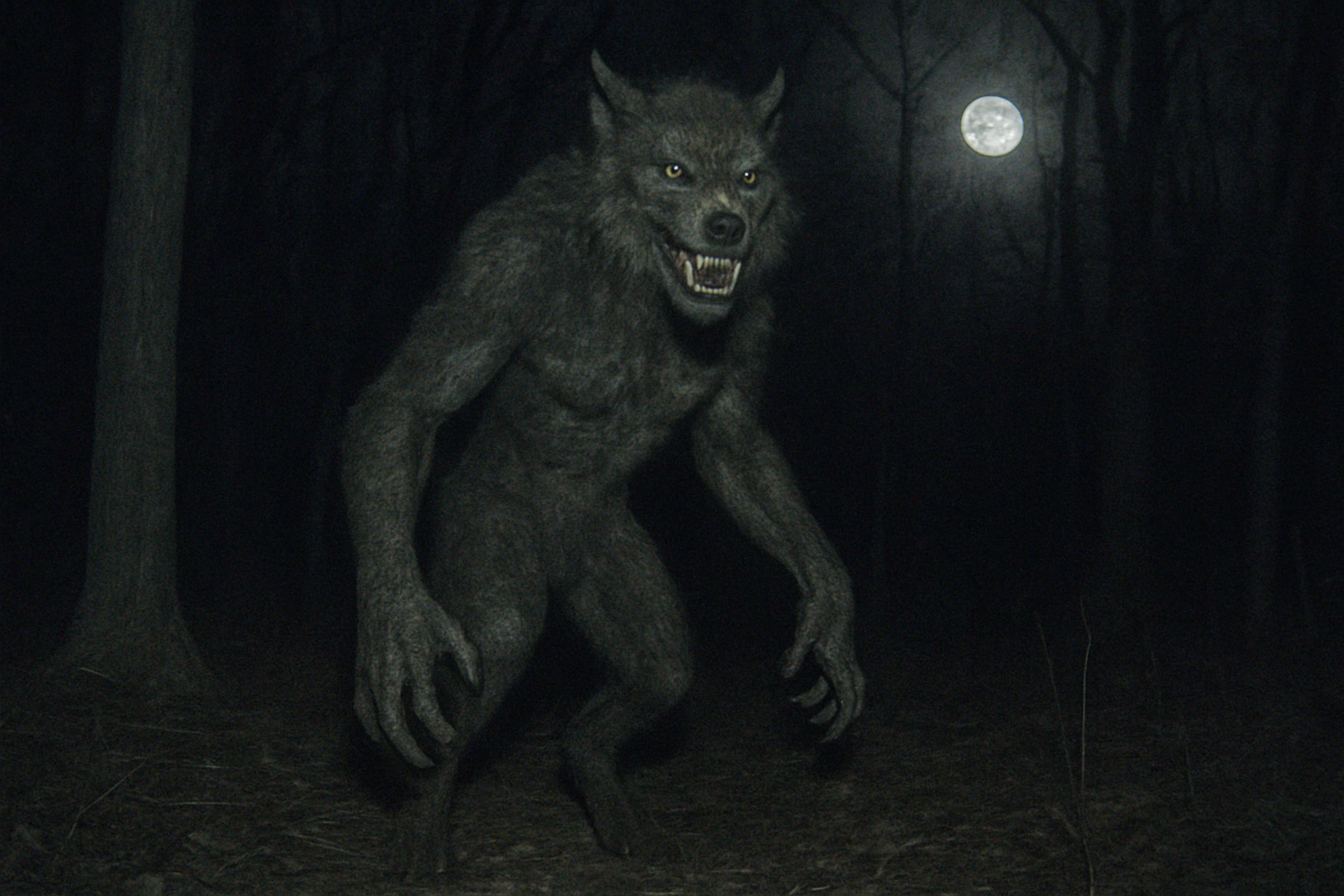
| Height & Build | Human-sized in human form; 6–7 ft in wolf form | Muscular, robust; larger than average wolves |
| Fur / Skin | Dense coat in wolf form; varies from gray, black, brown | Fur thickness increases in colder climates; camouflage in forested environments |
| Eyes | Luminous, reflective; amber or yellow | Eye-shine visible at night; may appear human in partial transformation |
| Fangs & Claws | Sharp, capable of tearing flesh | Primary offensive weapon; bite transmits lycanthropy |
| Movement | Agile, fast; superior sprinting and leaping ability | Outpaces normal wolves and humans; stealthy despite size |
| Senses | Heightened auditory, olfactory, nocturnal vision | Can detect prey or threats from significant distances |
III. Behavior & Predatory Patterns
A. Hunting & Feeding
- Primarily nocturnal; hunts intensify during full moons.
- Prefers livestock or isolated humans; capable of strategic stalking.
- Packs coordinate, sometimes ambushing multiple targets simultaneously.
B. Transformation
- Human → Wolf/Wolf-like beast; partial transformations reported (hands or face remain human).
- Triggered by full moon, extreme stress, or infection (bite-induced lycanthropy).
C. Social Structure
- Solitary or small packs; higher intelligence than average wolf.
- Some folklore suggests hierarchical packs, with alpha controlling subordinate werewolves.
D. Interaction With Humans
- Avoids large populations; attacks usually on isolated individuals.
- Bite transmits lycanthropic curse, creating new werewolves.
- Historical records indicate fear-driven hunting; communities would isolate or kill suspected lycanthropes.
IV. Habitat & Territory
| Feature | Description | Field Notes |
|---|---|---|
| Forests & Woodlands | Preferred hunting grounds; dense cover aids stealth | High number of historical sightings in Germany, France, and Eastern Europe |
| Rural Villages | Occasional presence; targeting livestock | May retreat to forest after attack |
| Lunar Influence Zones | Areas under clear night sky facilitate transformation | Peak activity on full moons, especially late night |
| Shelters | Caves, barns, abandoned structures | Used to rest, breed, or hide from humans |
V. Detection & Documentation
| Sign | Method of Detection | Notes |
|---|---|---|
| Unexplained attacks on livestock or humans | Field observation, camera traps | Usually nocturnal; claw/bite marks visible |
| Tracks | Wolf-like paw prints; may show human fingerprints | Tracks may transition during partial transformation |
| Howls / Growls | Audio recording, directional microphones | Often heard during full moon nights |
| Eye-shine in darkness | Night-vision devices | Amber/yellow; may appear in partial transformation |
| Transformation evidence | Witness reports, forensic evidence | Skin/hair samples, bite marks, sudden injuries to humans |
*Pro Tip: Werewolves are sensitive to silver and wolfsbane; these can be used defensively in extreme cases.*
VI. Weaknesses & Defensive Measures
- Silver: Contact with silver, especially weapons, can be lethal or debilitating.
- Wolfsbane (Aconitum): Repels, weakens, or slows transformation.
- Isolation of Suspected Lycanthropes: Historically used to prevent infection.
- Avoidance of Full Moon Nights: Peak activity occurs when lunar illumination is high.
VII. Liminal & Veil Connections
- Werewolves may be sensitive to metaphysical distortions, including thinned Veil areas.
- Transformation may amplify perception of liminal spaces; some folklore notes heightened awareness of unseen entities while in wolf form.
- Reports occasionally link werewolf attacks to areas of high emotional trauma or residual psychic energy, suggesting interaction with subtle planes.
- Witnesses describe heightened awareness of unseen presences while in proximity to the werewolf — suggesting a connection between lycanthropy and sensitivity to subtle planes.
- Some modern accounts include time distortion or déjà vu sensations during encounters — possibly due to cross-dimensional awareness triggered by the creature.
VIII. Field Reports & Historical Anecdotes
Subtitle: Documented Encounters, Historical Sightings, and Liminal Activity
| Year | Location | Witness / Source | Details / Notes |
|---|---|---|---|
| 1589 | Bedburg, Germany | Peter Stumpp trial documents | Alleged werewolf; killed livestock and villagers; executed; bite-induced curse alleged. |
| 1590s | French countryside | Local farmers & court records | Livestock mutilations coinciding with full moons; wolf-human hybrid footprints reported. |
| 1700 | Transylvania, Romania | Folklore / villagers | “Moon-beast” attacks; victims found with torn clothing and puncture wounds; eye-witnessed humanoid-wolf shape. |
| 1740 | Bavaria, Germany | Parish records | Series of nocturnal killings attributed to werewolf; suspect reportedly human by day. |
| 1800s | Scotland | Historical accounts | Solitary werewolf sightings; attacks on travelers; protective charms of silver and wolfsbane documented. |
*Field Notes: Lycanthropy is rare but documented; attacks often leave bite marks, claw wounds, and signs of extraordinary strength. Historical cases demonstrate a consistent correlation between full moons and attacks on isolated humans or livestock. Reports often include partial transformation sightings, enhanced strength, and regenerative abilities.*
Modern Sightings
| Year | Location | Witness | Details |
|---|---|---|---|
| 1993 | Appalachian Mountains, USA | Hiker group | Large wolf-like creature observed upright on hind legs; amber eyes; vanished at first light. |
| 2008 | Belgium | Local farmer | Livestock killed; unusual wolf prints measured over 12” in length; attack coincided with full moon. |
| 2015 | France | Night hikers | 7-ft humanoid wolf observed; crouched and moved between trees; rapid sprint; disappeared at dawn. |
| 2019 | Romania | Tourists | Partial transformation seen: human hands with claws, wolf-like face; creature howled, fled when approached. |
*Field Notes: Modern sightings, though sporadic, indicate continued presence in remote or forested areas, and the creatures exhibit the same intelligence, agility, and lunar sensitivity described in folklore.*
IX. Patterns & Observations
- Full Moon Correlation: Nearly every documented encounter occurs during or near full moon.
- Partial Transformations: Some reports indicate human-wolf hybrids; hands or facial features remain human while limbs or posture become wolf-like.
- Pack vs Solitary Behavior: Solitary werewolves appear more aggressive; pack sightings show coordinated stalking.
- Enhanced Senses & Regeneration: Confirmed across multiple reports; creatures display strength and healing beyond normal wolf/human capabilities.
- Transmission Risk: Bites often carry the curse, creating new lycanthropes.
X. Summary & Survival Notes
“The werewolf embodies the duality of man: intelligence and savagery combined. Observe caution, respect folklore, and avoid confrontation. When the moon is full, the forest holds a hunter that is faster, stronger, and more cunning than you.”
Key Points:
- Shapeshifter: Human ↔ Wolf/Wolf-beast.
- Strength & Agility: Exceeds human and wolf capabilities.
- Regeneration: Rapid healing from most injuries.
- Lycanthropic Contagion: Bite transmits curse.
- Weaknesses: Silver and wolfsbane are historically effective.
- Peak Activity: Nocturnal, especially full moons.
- Liminal Sensitivity: Possibly aware of Veil-thinning or metaphysical/cross-dimensional phenomena.
- Historical Continuity: Sightings span centuries; folklore aligns with modern reports